Common Microwave Problems We Fix
- Not heating — the microwave runs and the turntable turns, but food stays cold. Usually a fault in the high-voltage circuit: magnetron, high-voltage diode, capacitor, transformer or high-voltage fuse (on inverter models, often the inverter board), and sometimes a door interlock switch.
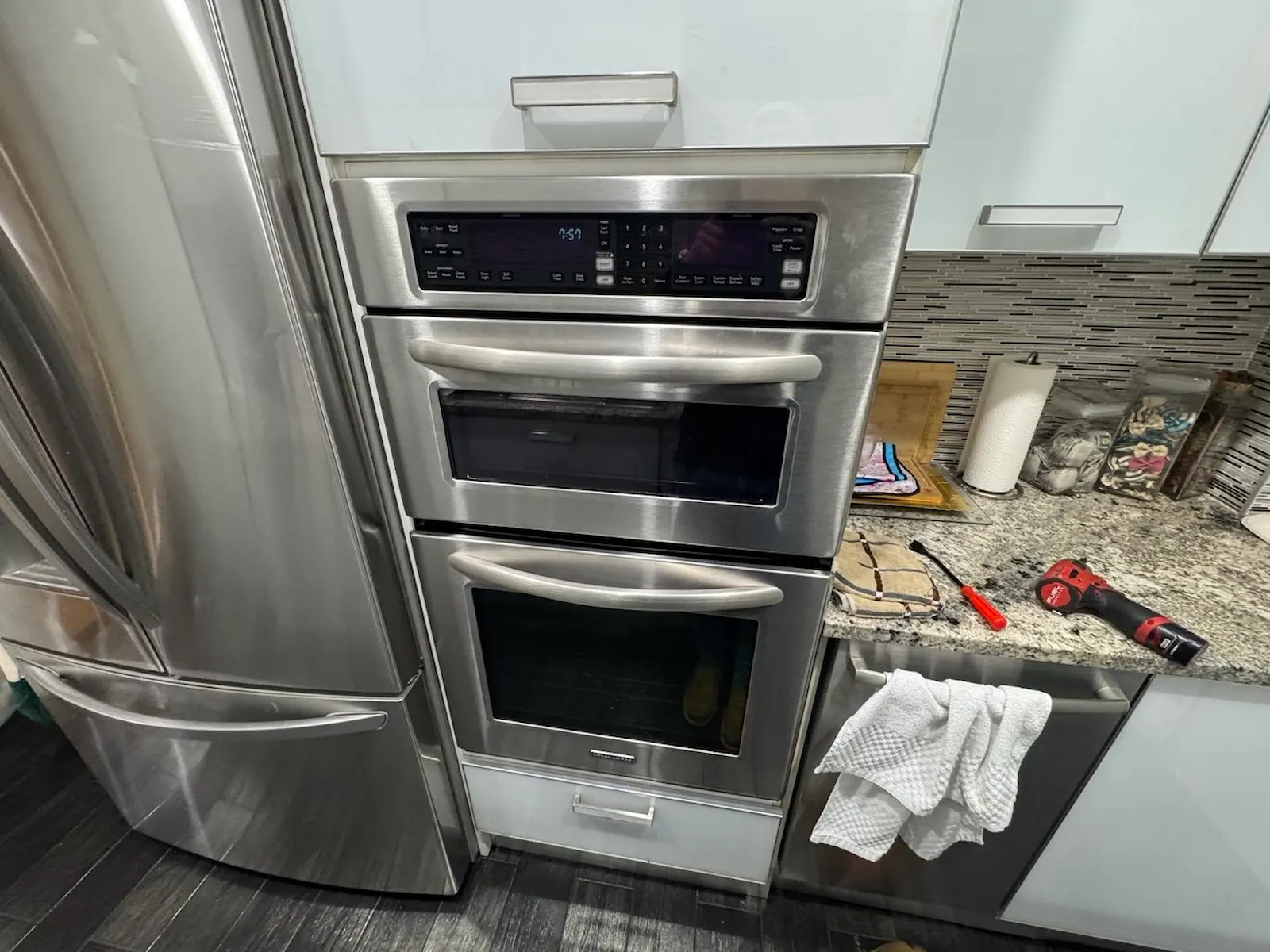
- Won't start or completely dead — a blown line fuse, failed door switch, tripped thermal cutout or control board fault. On built-in units we also check the power supply and the connection behind the trim kit.
- Sparking or arcing inside — a damaged waveguide cover, chipped cavity paint or a worn rack support. Stop using the microwave until it has been inspected.
- Door or latch problems — broken latch hooks, misaligned door switches or worn hinges. A microwave is designed not to run unless its door interlocks close correctly, and that safety system should never be bypassed.
- Keypad or control problems — unresponsive keys, a blank or flickering display, or error codes, traced to the touchpad membrane or the control board.
- Turntable not turning — a failed turntable motor, a broken coupler or a worn roller guide.
- Intermittent heating — heats on some cycles but not others, often a weakening magnetron, a thermal cutout opening early or an intermittent door switch.
- Unusual noise — a loud hum or buzz from the high-voltage components, grinding from the turntable motor, or a noisy cooling fan or vent fan.
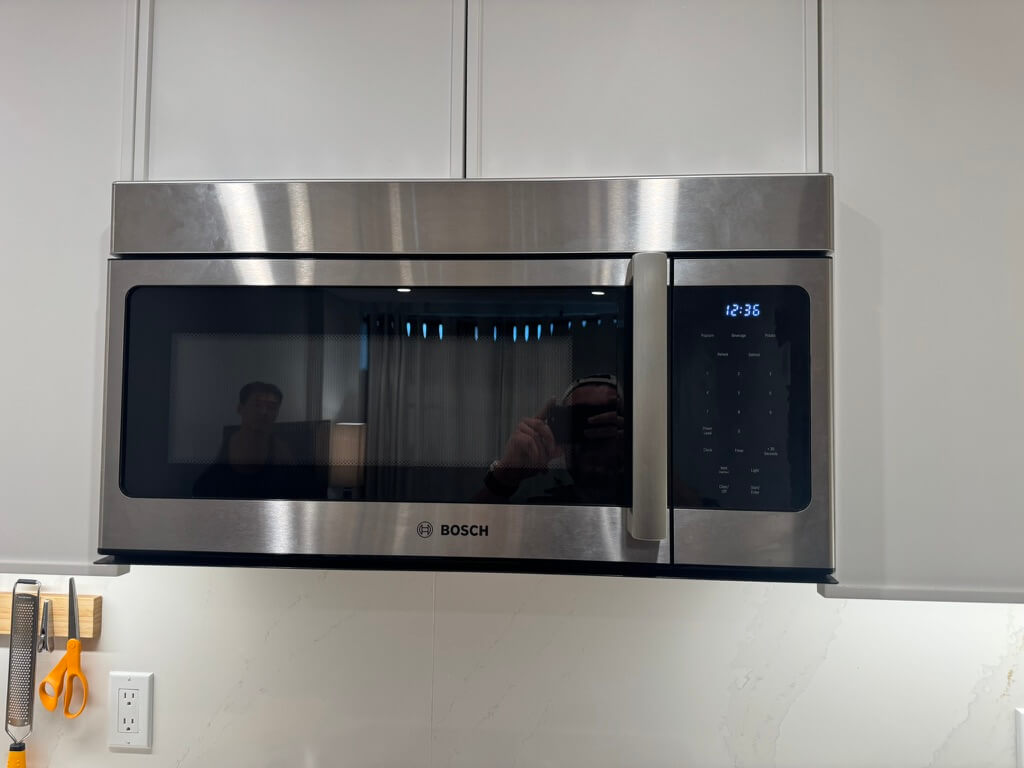
- Vent fan or cooktop light not working — on over-the-range models, the fan motor, switch, light socket or control board.
- Trips the breaker or loses power — a breaker that trips when the microwave starts usually points to a short in the high-voltage section (capacitor, diode, magnetron or transformer). Intermittent power loss or a control error on a built-in unit is traced to the control board, a fuse or the wiring connection behind the trim kit.
A safety note: do not open a microwave cabinet yourself. The high-voltage capacitor can hold a dangerous charge even after the microwave is unplugged. Our technicians discharge and test the high-voltage system before working on it.